

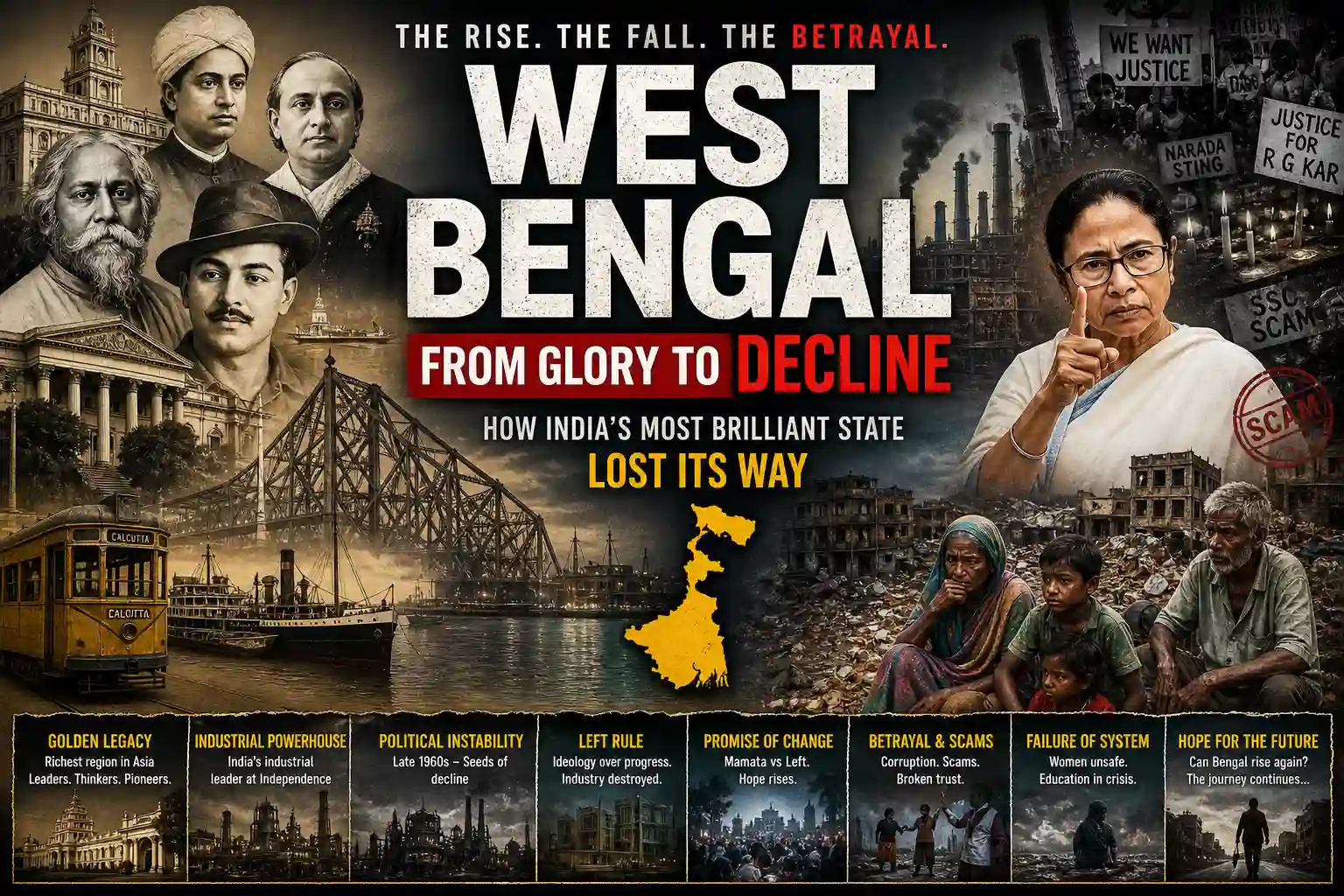
What if I told you that Singapore's urban blueprint was partially inspired by Kolkata? Or that a Bengali physicist's name is permanently embedded in the scientific terminology of the Higgs boson, the so-called "God particle"? These are not myths. They are documented facts from a time when West Bengal was not just India's most advanced state but also one of the most intellectually and economically significant regions on the planet. That era feels distant today. West Bengal now ranks 27th out of 28 Indian states on the Human Development Index. Of approximately four lakh registered beggars across India, nearly one lakh live within Bengal's borders. The state places second in the nation for child marriage rates and consistently ranks among the weakest in educational outcomes at the secondary and higher secondary levels. A state that once defined India's industrial, intellectual, and social identity now struggles to provide basic employment and security to its own people. How did this happen? The answer stretches across centuries, political ideologies, and a series of catastrophic governance failures, each one more damaging than the last.
Bengal's Golden Legacy: The Richest Region in Asia
A Commercial and Cultural Powerhouse
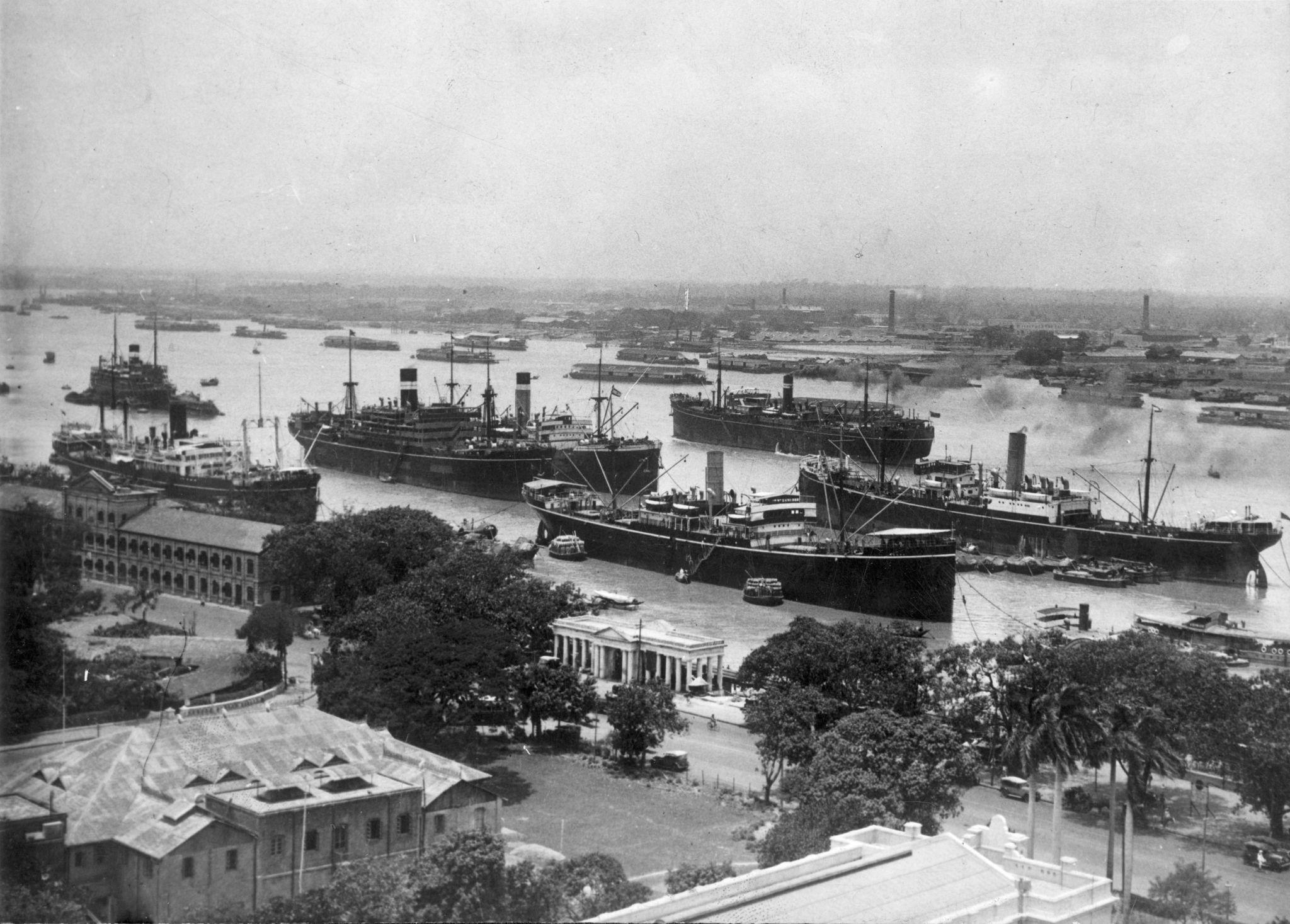
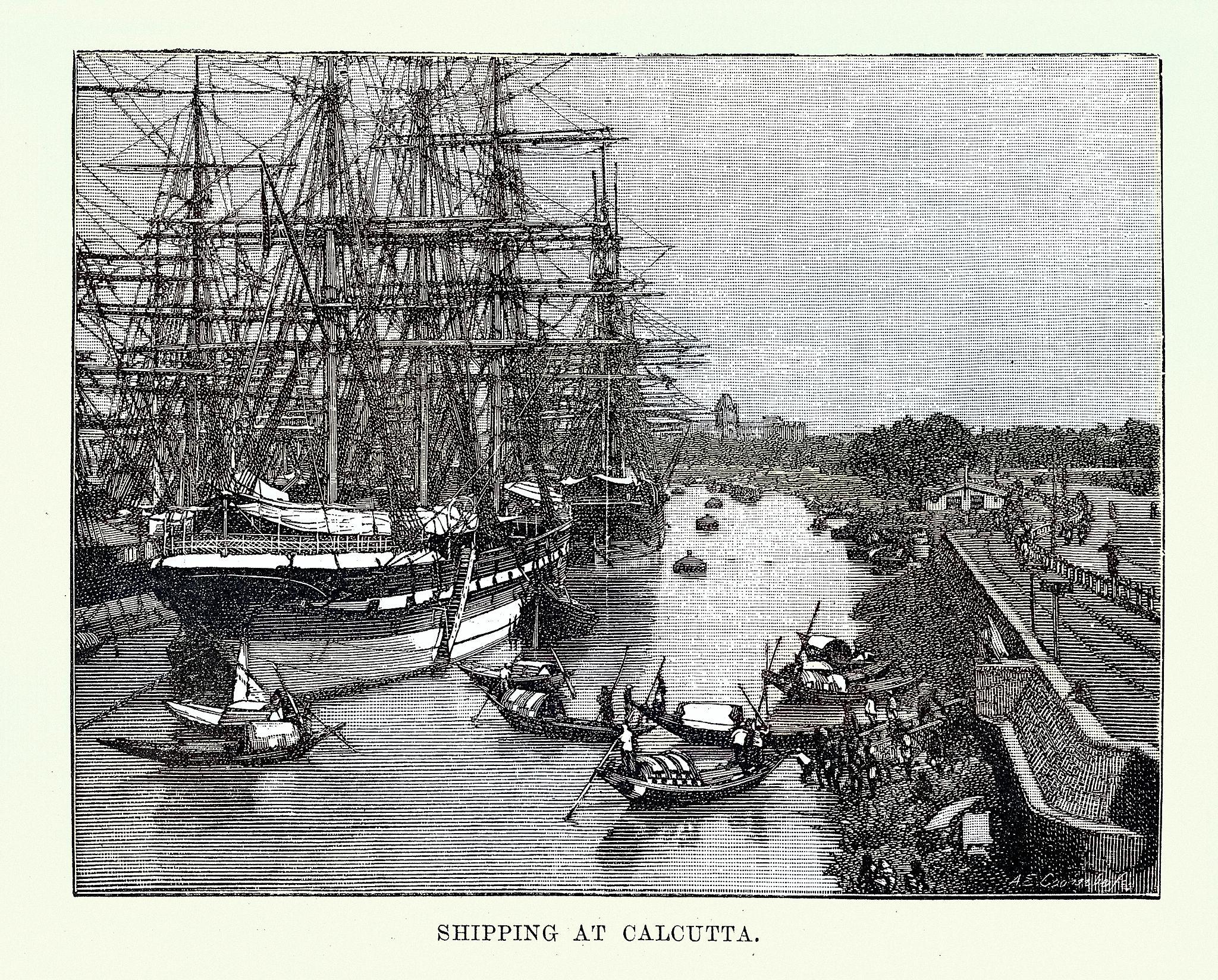
Between the 17th and 18th centuries, Bengal was widely regarded as one of the wealthiest territories in the world. Positioned across the fertile floodplains of the Ganges and Brahmaputra rivers, the region commanded global trade in textiles and handlooms. Historical estimates suggest that Bengal alone produced around 80 percent of all raw silk exported from Asia during this period. The fine muslin of Dhaka and the silk weaves of Murshidabad were celebrated across the globe. French traveler François Bernier, writing in the 17th century, noted that Bengal surpassed even Egypt in material wealth. According to research by noted economic historian Angus Maddison, Bengal's contribution to world GDP at its peak reached approximately 12 percent, a staggering figure by any historical standard. Bengali shipbuilders were technically sophisticated enough that the British Navy reportedly modeled some of its vessel designs on their methods. The region's commercial networks extended across Asia, Europe, and the Middle East. Pioneers of Education and Social Reform Bengal's influence went far beyond trade. In 1817, Hindu College in Calcutta became the first modern educational institution established in Asia. The University of Calcutta, founded in 1857, was the first university of its kind across the continent and conferred India's inaugural postgraduate and doctoral degrees. The intellectual output of Bengal during the 19th and early 20th centuries was remarkable by any measure:
Raja Ram Mohan Roy successfully campaigned for the abolition of Sati (widow immolation) in 1829, decades before comparable reforms reached other parts of India.
Ishwar Chandra Vidyasagar championed the Widow Remarriage Act, enabling remarriage for widows in Bengal as early as the 1850s, a social reform that took another century to normalize in states like Uttar Pradesh and Rajasthan.
Jagadish Chandra Bose demonstrated the transmission of radio waves in 1895, two full years before Guglielmo Marconi, who receives most of the historical credit.
Satyendra Nath Bose collaborated directly with Albert Einstein, and the term "boson" used globally in quantum physics and particle science bears his name.
Subhas Chandra Bose ranked fourth across the entire British Empire in the Indian Civil Service examination in 1920, with only four British candidates scoring above him. He resigned the position to pursue Indian independence.
India's Industrial Leader at Independence
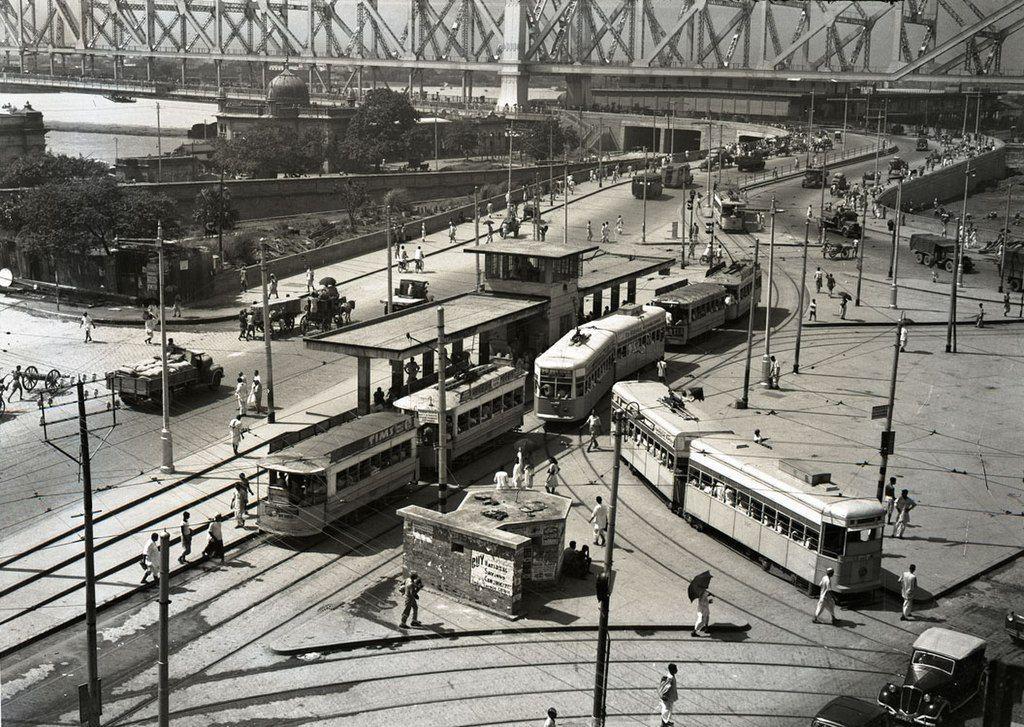
When India became independent in 1947, West Bengal was its most industrially developed state, contributing an estimated 27 percent of the country's total industrial output. Major corporations, including Tata Steel, BATA, ITC, and Hindustan Motors, had significant manufacturing operations in the state. Kolkata housed India's largest port. Howrah earned the nickname "Manchester of the East" for its engineering output. In 1951, IIT Kharagpur, the first Indian Institute of Technology, opened in West Bengal, cementing the state's position at the frontier of technical education. Through 1960, Bengal contributed over 10 percent to national GDP, with per capita income comfortably above the national average. It was, by most assessments, the model Indian state.
The First Fractures: Political Instability in the Late 1960s
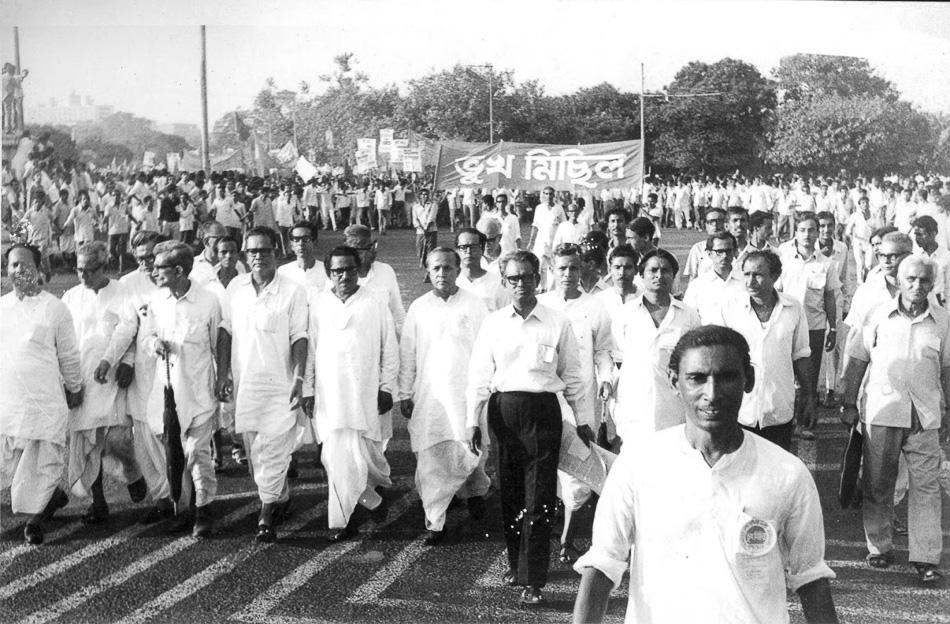
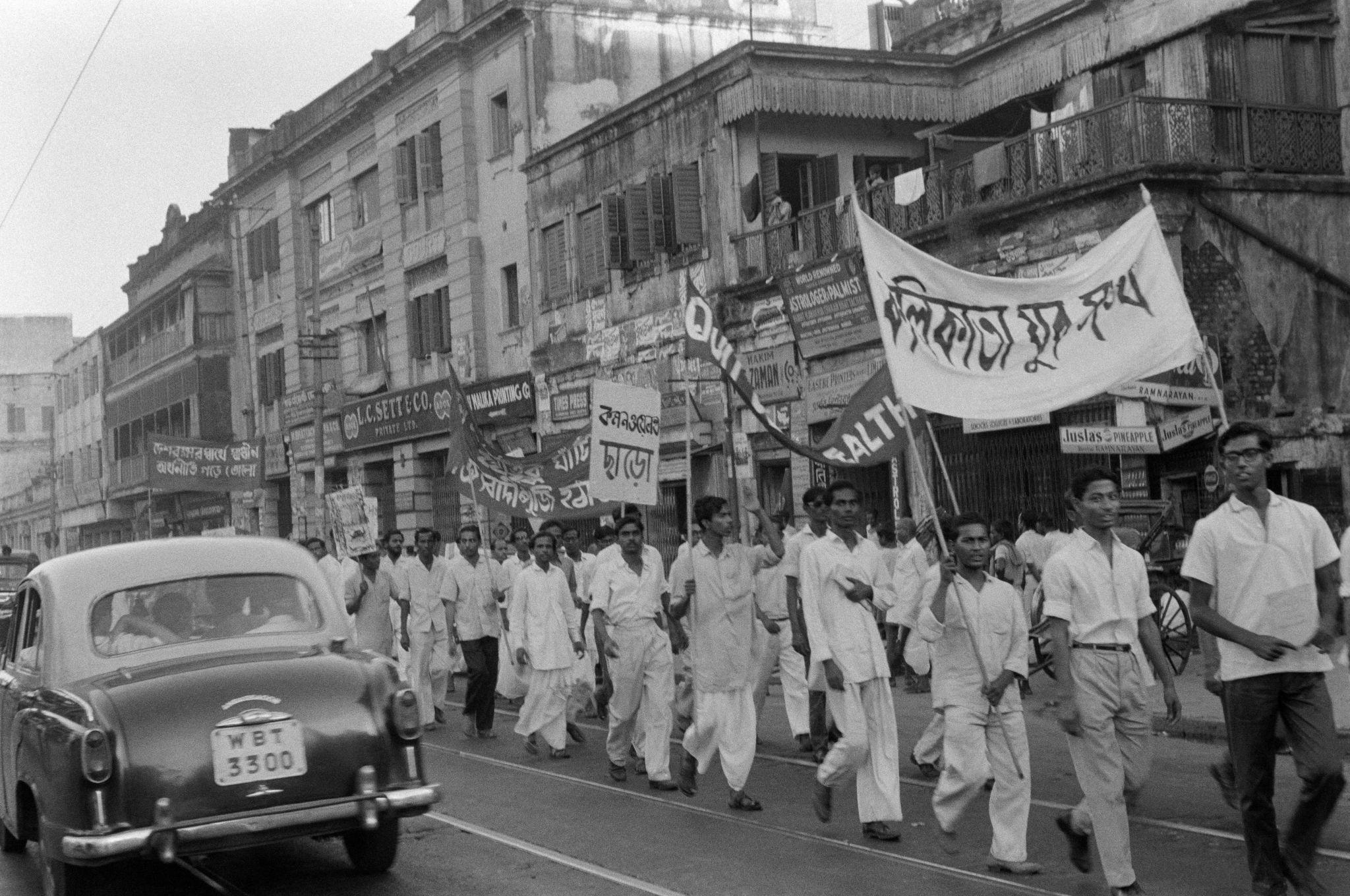
The deterioration did not happen overnight. Its seeds were planted during a period of political instability beginning in 1967. A severe food crisis destabilized the Congress government then in power. Grain prices surged, refugee flows from then-East Pakistan strained public resources, and corruption allegations eroded public trust. Congress lost Bengal's state elections for the first time, replaced by a fragile coalition called the United Front. The coalition collapsed within nine months, and the president's rule was imposed. During this turbulent period, episodes of political violence became increasingly normalized. Industrialists, including members of the prominent Birla business family, faced targeted intimidation in Kolkata. One widely cited incident describes a leading industrialist being forced to walk a significant distance through the street after a mob confrontation. He left Kolkata permanently, withdrawing his business investments entirely. Such incidents signaled to the broader business community that Bengal was no longer a safe environment for enterprise.
Three Decades of Left Rule: Ideology Over Progress
How the CPIM Dismantled Bengal's Economy
In 1977, the Communist Party of India (Marxist) won a decisive majority in Bengal, beginning an unbroken 34-year tenure in power. While land reforms and rural outreach defined some positive aspects of early Left governance, the broader economic and institutional impact was devastating. The CPIM's affiliated trade union pursued an aggressive strategy of strikes, factory gheraos (encirclements), and labor confrontations. By 1980, Bengal was recording over 100 industrial strikes annually on average. The consequences were predictable:
1. Hindustan Motors gradually ceased operations.
2. BATA relocated manufacturing to other states.
3. Major engineering companies closed one by one.
4. New investment dried up almost entirely.
The ideological resistance to modernization was explicit. When India's technology sector began its early growth phase in the 1980s, the Left government in Bengal actively blocked the installation of computers in banks, fearing job displacement. A reported offer to establish what eventually became India's IT hub was declined by the Bengal government. Bangalore emerged as the beneficiary. An entire generation of Bengalis paid the price for that ideological rigidity.
A Culture of Political Violence
The human cost of Left rule extended beyond economics. Between 1977 and 2011, political violence claimed an estimated 28,000 lives in West Bengal, a figure that exceeds documented casualties from Punjab's insurgency period and the conflict in Kashmir. Despite the scale, this violence received limited sustained coverage in the national media.
The CPIM built a comprehensive local cadre network that controlled villages, panchayats (local governance units), and distribution systems. Political loyalty determined access to government resources. Dissent was suppressed through intimidation and force.
The Collapse of Educational Excellence
Academic institutions suffered alongside the economy. Faculty appointments at Calcutta University, Jadavpur University, and Presidency College increasingly reflected political affiliation rather than academic merit. Attendance at party meetings and ideologically aligned research became implicit professional requirements.
The consequences were measurable. Talented academics migrated to universities in Delhi, Jawaharlal Nehru University, and international institutions. By 2011, Bengal's literacy rate, which had exceeded Maharashtra's in 1960, had fallen behind it. The state's contribution to national GDP had declined from over 10 percent to approximately 6.5 percent, and per capita income had slipped below the national average.
Mamata Banerjee: The Promise of Change
From Street Fighter to Chief Minister
By 2011, Bengal was exhausted. Thirty-four years of ideological governance had left the state economically weakened, institutionally hollowed out, and deeply disillusioned. Into this environment stepped Mamata Banerjee, a politician whose personal courage had been demonstrated repeatedly over two decades.
In 1990, she was hospitalized for a month after being assaulted by political opponents. She was physically dragged and removed by police from outside the Writers' Building, the seat of the state government, even while serving as a union minister. In response, she made a public vow not to enter that building until she became chief minister.
Her defiance of the Singur land acquisition, where the Left government displaced thousands of farmers without adequate compensation, became a defining political moment. Her 21-day hunger strike galvanized public opinion. Her presence at Nandigram, where state police and party cadres opened fire on protesters, resulting in over 140 deaths, made her the undisputed face of opposition to Left authoritarianism.
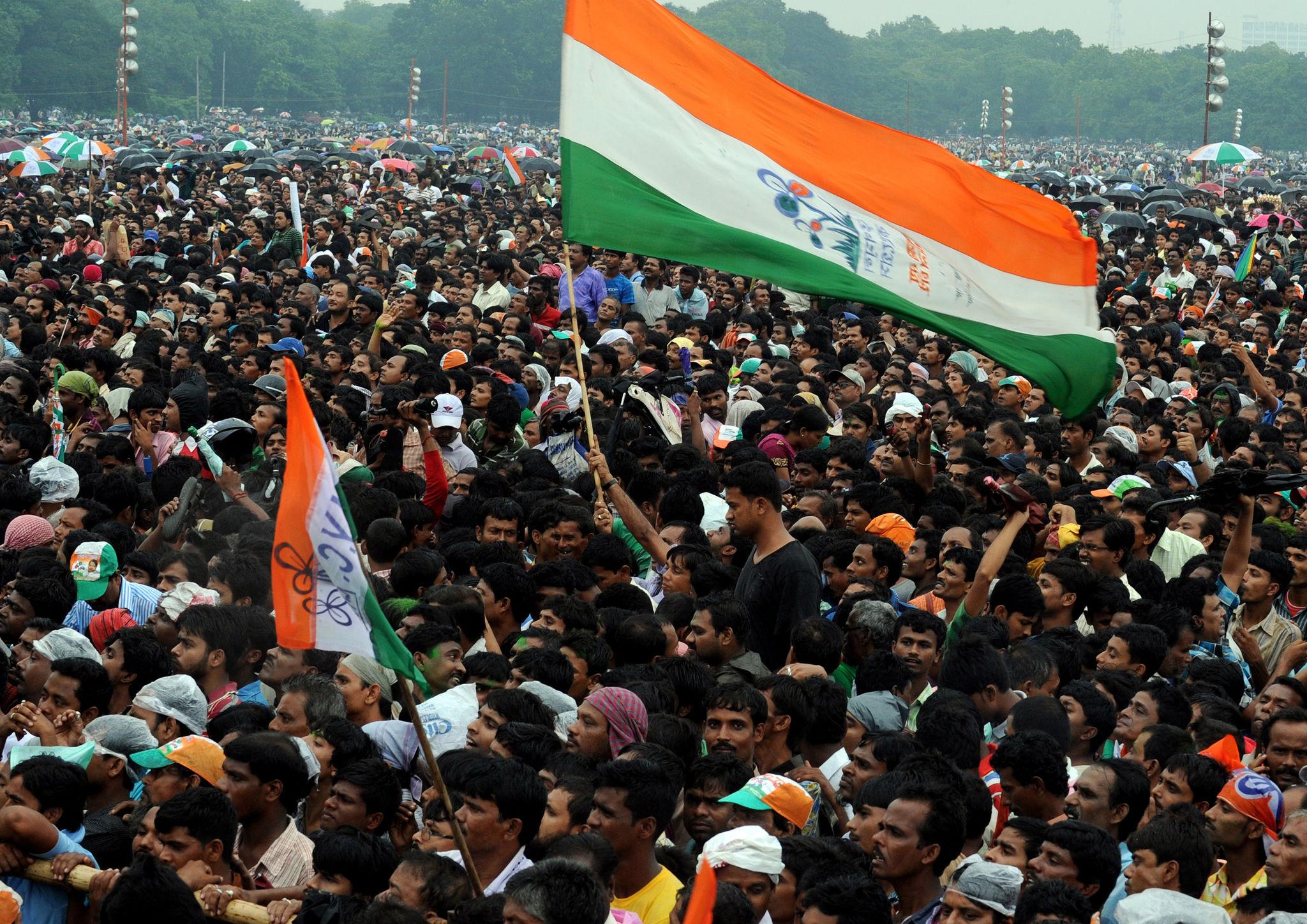
In 1998, she had broken away from the Indian National Congress to found the Trinamool Congress (TMC), believing that genuine opposition to the CPIM required an independent political vehicle. Her judgment proved correct. In 2011, the Left's 34-year hold on power ended. Mamata Banerjee became Chief Minister of West Bengal.
Bengal believed transformation had arrived.
The Betrayal: TMC's Record in Power
Old System, New Flag
The transition of power that followed was, in practice, far less complete than it appeared. The CPIM's extensive local cadre network, the men who had spent decades collecting informal levies, managing electoral booths through coercion, and enforcing party authority at the village level, largely switched allegiance to the TMC rather than dissolving. Mamata Banerjee, recognizing the operational advantage of absorbing this existing infrastructure rather than dismantling it, did not systematically remove it.
The system they had operated continued under new management. Central government welfare funds, housing grants, employment program wages, and even modest funeral assistance allowances were routinely subject to informal deductions taken by local party functionaries. Residents seeking to build homes were expected to purchase construction materials through party-affiliated suppliers. These were not isolated incidents. They constituted a pervasive parallel taxation on Bengal's poorest residents.
A Pattern of Serious Corruption
A series of major scandals defined the TMC's years in power:

Failures in Women's Safety
The most troubling chapters of the TMC government's record concern the safety and dignity of women, an area Mamata Banerjee had repeatedly identified as central to her political identity.
In Sandeshkhali, a district in North 24 Parganas, a local TMC leader and his associates faced accusations of systematic abuse of women over an extended period. When the allegations became public, the accused evaded law enforcement for 55 days. The Bengal Police, operating under a Home Department for which the chief minister herself holds ministerial responsibility, failed to locate him during that period.
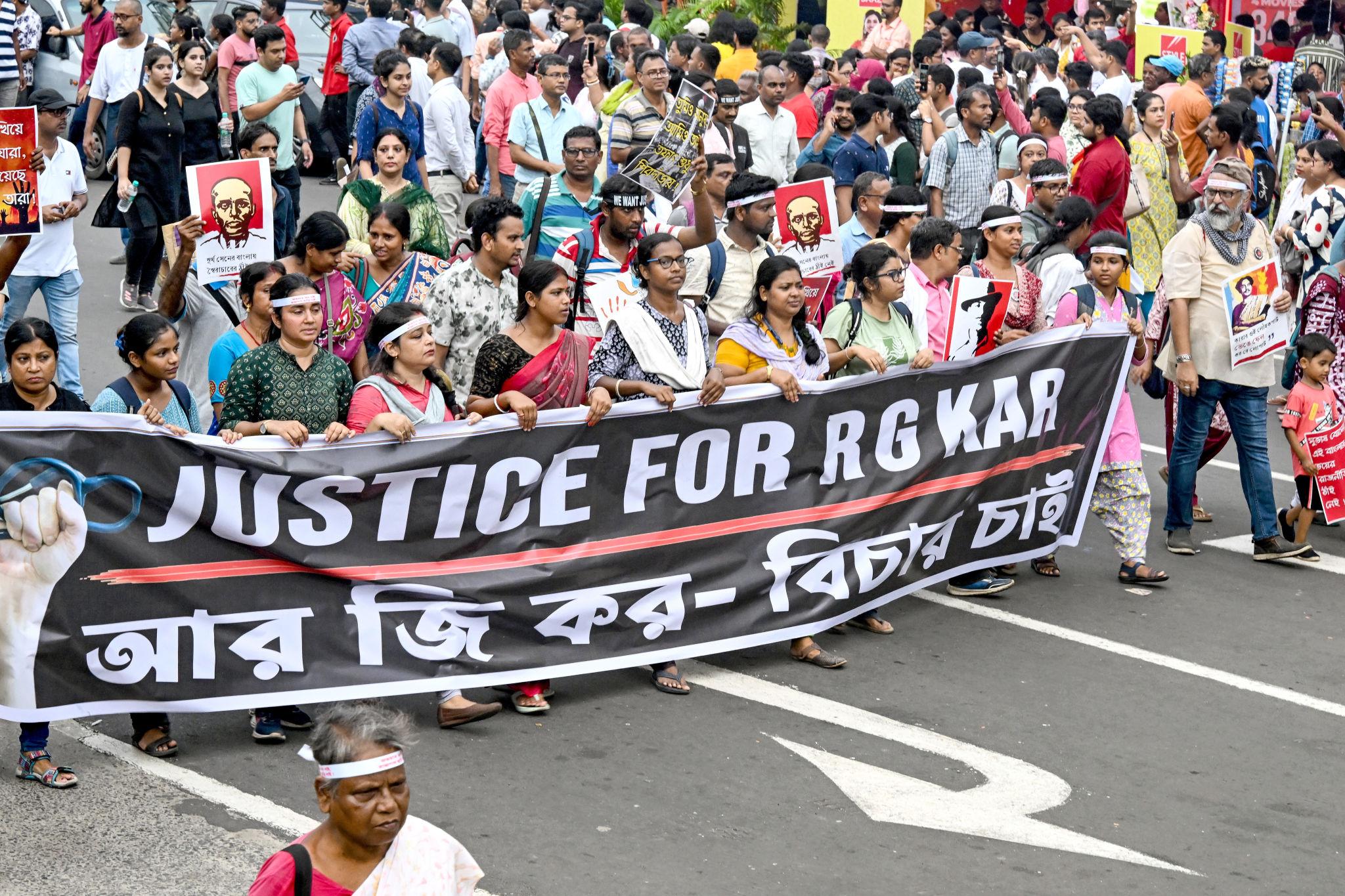
The RG Kar Medical College case proved even more politically damaging.
A 31-year-old postgraduate medical student was found dead inside the hospital's seminar room following an overnight duty shift. Medical and forensic evidence established that she had been raped and murdered. Hospital administration initially informed her family that she had died by suicide and delayed their access to the body. Construction activity at the scene began shortly after the discovery, raising concerns about evidence preservation.
The chief minister's public statement in the aftermath suggesting that young women should avoid being alone at night drew immediate and widespread condemnation. For a leader whose entire political narrative centered on women's empowerment and who held simultaneous authority as chief minister, home minister, and health minister of the state where the crime occurred, the remark struck many observers as both inadequate and contradictory.
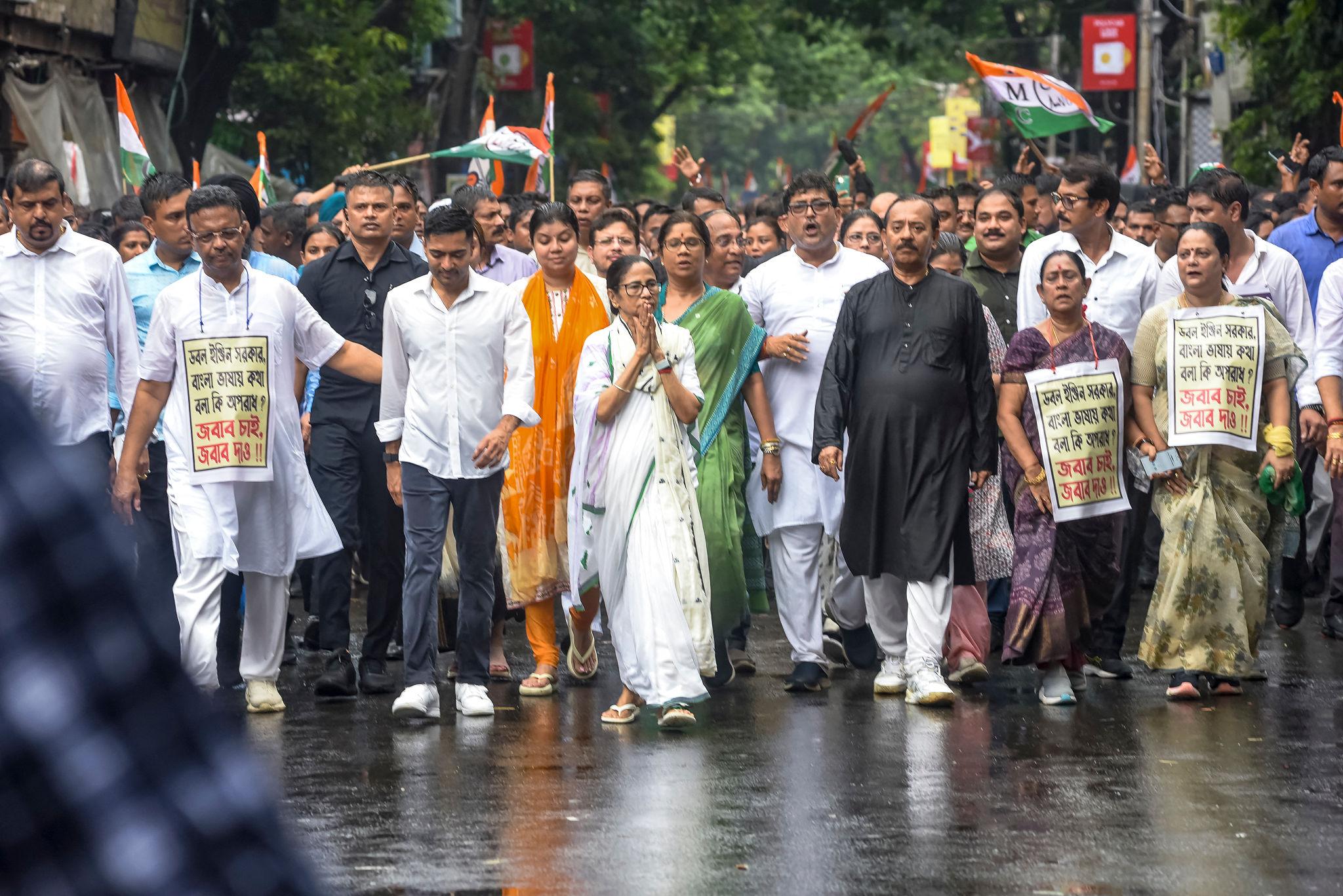
Mass protests followed, led by medical professionals, students, and ordinary citizens. Doctors staged work stoppages. In a moment widely interpreted as political theater, the chief minister subsequently organized her own public march demanding justice, positioning herself as a protestor against the institutional failure for which her own government bore direct responsibility.
The Saradha Ponzi Scheme
involved a fraudulent investment operation that collapsed, wiping out the savings of an estimated 1.7 million small investors. More than 200 victims died by suicide. The scheme's operator had made substantial payments reportedly attributed to the purchase of paintings by the Chief Minister — a detail that raised serious questions that were never satisfactorily resolved.
The Narada Sting Operation produced footage of 11 senior TMC figures, including sitting ministers and members of parliament, accepting cash from journalists posing as business representatives seeking political favors.
The SSC recruitment scandal became one of the most consequential corruption cases in recent Indian governance history. The School Service Commission overseeing teacher recruitment was found to have manipulated answer sheets and distributed appointments without merit-based selection. A senior TMC cabinet minister was arrested. Searches at the residence of his associate uncovered approximately ₹50 crore in cash along with significant quantities of gold. The Calcutta High Court subsequently invalidated the appointments of more than 25,000 teachers, devastating thousands of individuals who had spent years preparing for public service careers.
To each of these controversies, the chief minister's consistent public response attributed them to political conspiracies by the opposition, a position that became increasingly difficult to maintain as judicial findings mounted.
What Mamata Banerjee's Government Did Achieve
Acknowledging failures of governance does not require ignoring genuine accomplishments. The TMC government introduced more than 70 social welfare programs during its tenure, several of which produced measurable benefits.
Kanyashri, a conditional cash transfer program for adolescent girls, contributed to a documented reduction in school dropout rates among female students and received international recognition from the United Nations.
Lakshmir Bhandar provides direct monthly payments to women who are the primary heads of their households, offering financial autonomy to millions of rural women.
Rupashri offers financial assistance to families at the time of daughters' marriages, helping address one economic driver of early marriage.
Subsidized food grain distribution at ₹2 per kilogram provided genuine relief to the state's poorest households during difficult economic periods.
The direct benefit transfer model channeling government support payments directly to beneficiaries rather than through intermediaries was adopted and refined by the TMC government earlier than by many other Indian states, and variations of this approach have since been adopted across party lines nationwide.
These programs addressed real suffering and improved lives. Their limitation is structural: welfare schemes can stabilize poverty and reduce its most acute manifestations, but they cannot replace the economic growth and employment creation that only industrial development and institutional investment generate. Bengal's educated youth continued to migrate to Bangalore, Mumbai, and Delhi in large numbers not because welfare programs failed, but because the state offered insufficient economic opportunity to retain them.
The Authoritarian Pattern: Silencing Dissent
One of the earliest signals of the direction Mamata Banerjee's government would take came within a year of her taking office. A chemistry professor at Jadavpur University, 60 years old, with decades of academic service, shared a satirical cartoon mocking the chief minister on a social media platform. He was arrested. The chief minister publicly labeled him a Maoist extremist during a live television broadcast.
When students at Jadavpur University protested the arrest and questioned the government's commitment to free expression, the same principle Mamata had championed against the Left, they were characterized as agents of the CPIM. Journalists who reported critically on the cartoon case faced police action.
The parallel with the CPIM's governance was not subtle. Mamata Banerjee had spent years arguing that the Left's inability to tolerate questioning was its defining flaw. Within months of assuming power, her government demonstrated the same intolerance using the same instruments of state authority. Bengal's people had exchanged one administration that punished dissent for another that behaved identically.
What Bengal's Story Teaches Us
West Bengal's trajectory over the past six decades contains important lessons that extend beyond regional politics.
Ideology without pragmatism destroys economies.
The decision to reject computers, automation, and investment in the name of protecting jobs ultimately eliminated far more livelihoods than technology adoption would have. The IT sector that Bengal refused became one of India's greatest economic success stories in another state.
Political machines outlast governments. The seamless transfer of the CPIM's local cadre network into TMC's operational structure demonstrates that patronage systems embedded in local governance are extraordinarily difficult to dismantle through electoral change alone.
Welfare without development is maintenance, not progress. Financial transfers and food subsidies are necessary humanitarian interventions, but they cannot substitute for the employment, institutional quality, and economic opportunity that make welfare unnecessary for the majority.
Accountability requires independent institutions. The systematic politicization of Bengal's universities, police, media environment, and local governance structures removed the checks that might have constrained the worst excesses of successive governments.
Conclusion: Bengal's Unfinished Reckoning
West Bengal possesses something that cannot be manufactured or purchased: a deep civilizational inheritance of intellectual rigor, artistic achievement, and reformist courage. The thinkers, scientists, freedom fighters, and cultural figures produced by this soil left permanent marks on Indian and world history. That generative capacity has not disappeared.
What has disappeared or been systematically suppressed is the institutional environment required to translate that potential into broadly shared prosperity. Rebuilding it will require more than electoral change. It will require dismantling patronage structures, restoring merit to public appointments, rebuilding investor confidence, and developing governance accountability that survives changes in the ruling party.
Bengal's people have shown, repeatedly, that they recognize the difference between leaders who serve them and leaders who exploit them. The state's history is not simply one of failure; it is also one of resilience, protest, and the persistent demand for something better. The question is whether its next chapter will finally deliver it.
Disclaimer: This article presents a journalistic and analytical overview of West Bengal's political and economic history. All claims are drawn from documented public records, court proceedings, and established historical research. The intent is to inform, not to advocate for any specific political party.Share
